 Cookie preferences

Pronounced Senya
You open the back office and PSENYA tells you what's wrong with the shop.
Why that order is stuck, why that email never went out, what changed since yesterday. If something has to change, it shows you what it will touch and waits until you say yes.
For PrestaShop 8, inside the back office. The best and only AI assistant that truly does the work of a senior engineer. Not a person, and not a chat for your customers.
149 €/month, tax not included. 250 active licences, worldwide.
See the PrestaShop AI assistant and what it costs
- PrestaShop 8
- Assistant in 6 languages
149 € a month, tax not included. One shop, unlimited employees.
20 million tokens a month on the paid licence.
250 active licences, worldwide. One licence is one shop.
It reads, asks permission and checks.
-
It reads the shop. Orders, catalog, customers, modules, configuration, logs, files, code and the database. It looks before it talks. Watchdog checks whether the shop can sell and leaves a report.
-
It asks before it writes. A status, a price, a voucher, a product text, a reply to a customer: anything that touches data waits for your confirmation.
-
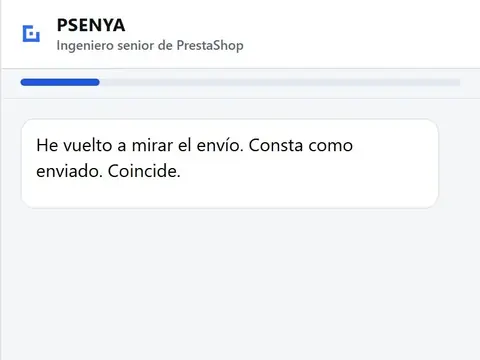
It checks its own work. It reads the shop again. If the result does not match what it just said, it tells you. If a confirmed change is not what you wanted, it can undo it.
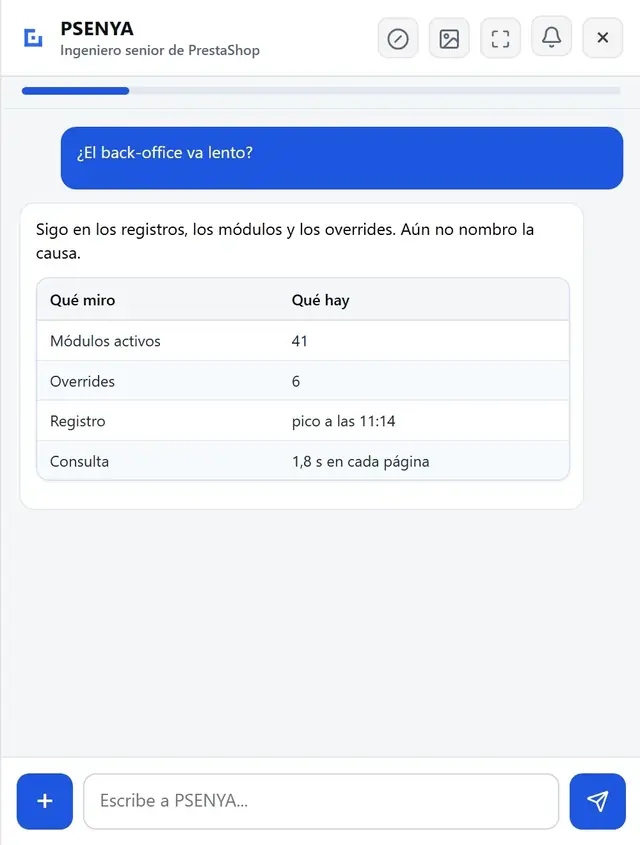
What is PSENYA, exactly?
It is a module you install on your PrestaShop 8. From then on, anyone on your team opens the back office and asks in their own language, in their own words. PSENYA looks at the real shop before it answers: the order, the product, the module, the configuration, the error log. It tells you what it found. If something has to be changed, it prepares it and waits for your confirmation.
What it is?
A senior engineer with access to the core, the code and the database. It diagnoses, prepares the change, waits for your yes, and verifies. A colleague in your employee's language.
What it is not?
A chat the customer opens alone on the storefront. A module whose only job is generating text. The developer who builds a custom module.
What does asking it look like?
This is an ordinary request, and what happens next. There is no menu: you talk to it the way you would talk to a colleague.
- You write:
- "An order has been in payment accepted for three days, and the customer says nothing arrived."
- PSENYA:
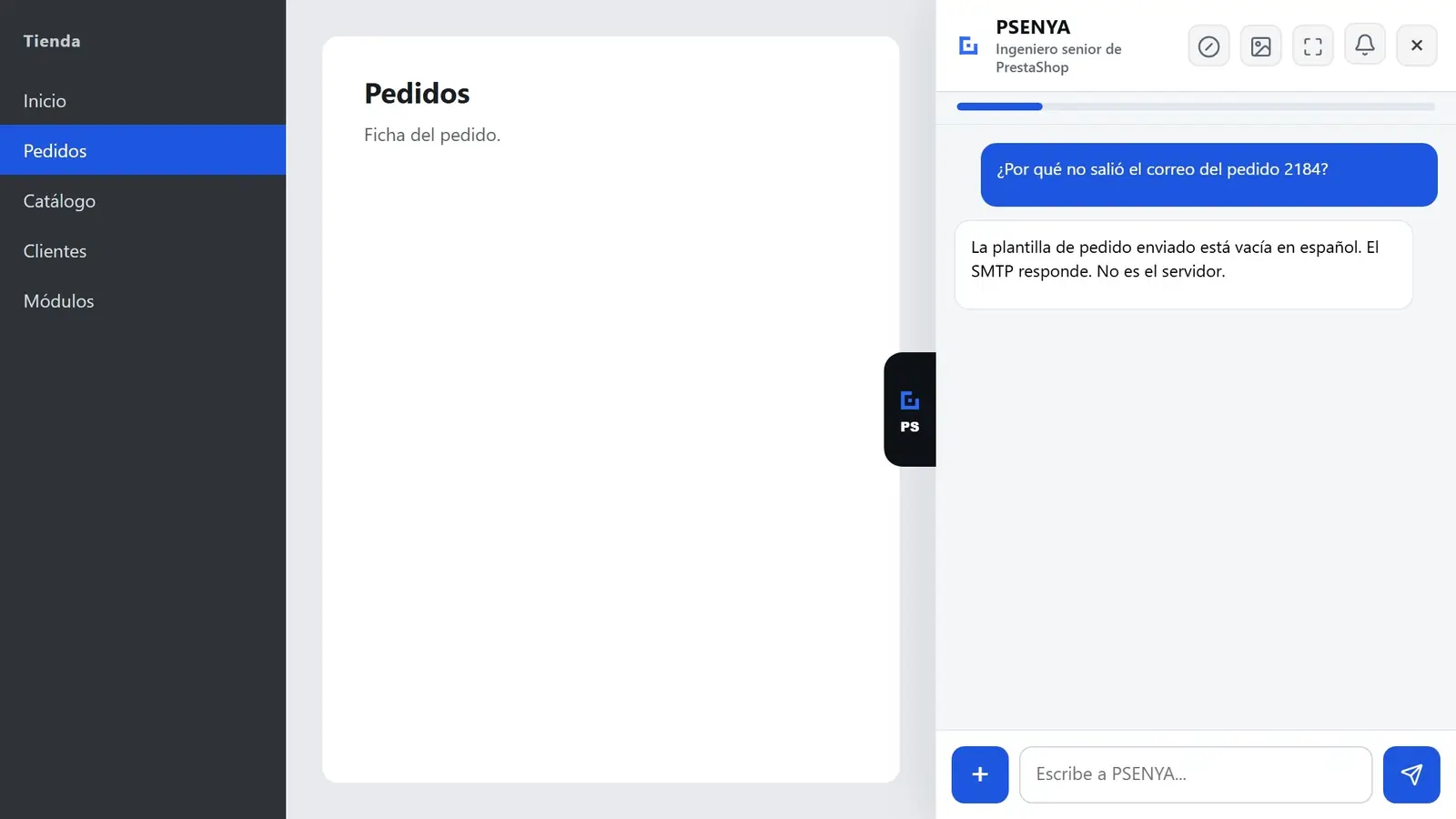
- opens the order, looks at the status and the history, checks whether the email for that status ever went out, and reads the template and the mail log. It comes back with what it found: the order is fine, the email never went out, and the log says why. If the fix is a change to the shop, it prepares it and shows you what it will touch before doing it.
- You:
- say yes, or no.
How does PSENYA work?
PSENYA follows the same four steps every time: it investigates the shop, names the cause it can prove, does the work with your confirmation, and checks the result against the shop. If the shop contradicts what it just said, it tells you instead of insisting.
Investigate.
It opens the shop and looks.
Diagnose.
It names the cause, with the evidence.
Do the work.
After you confirm.
Check.
It reads the shop again.
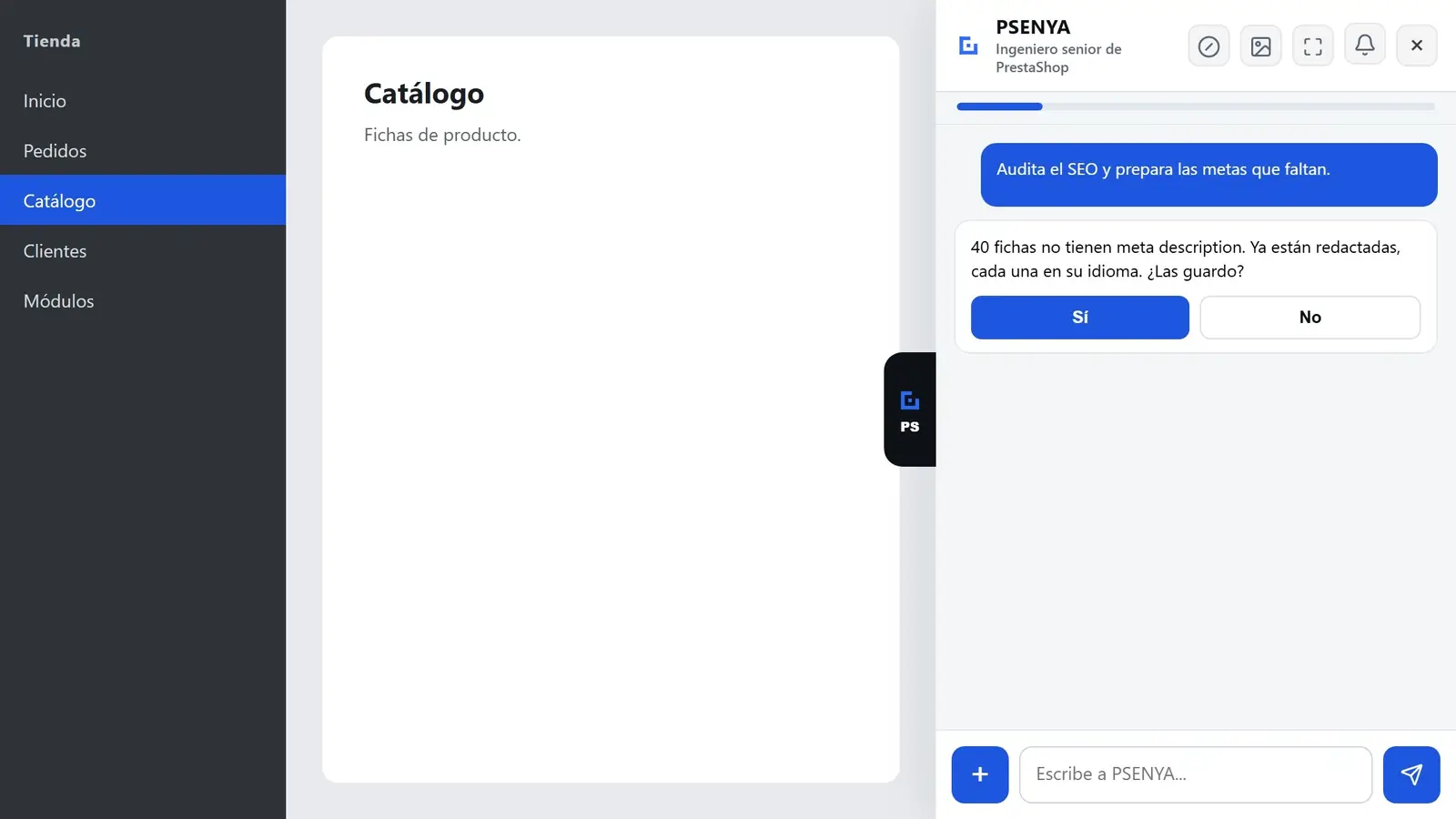
Does PSENYA do anything when nobody asks?
Yes. Watchdog checks on its own whether the shop can sell: payment methods, carriers, maintenance mode, stuck orders, errors. When the report gets worse, it warns you in the back office. It does not change the shop. The daily report and the stuck-order queue tell you what to look at today, and scheduled tasks deliver reports without anyone asking.
The first time you enter the licence, PSENYA runs this check once so you can see the report. To keep checking every day, turn Watchdog on in its settings and add the shop's scheduled task.
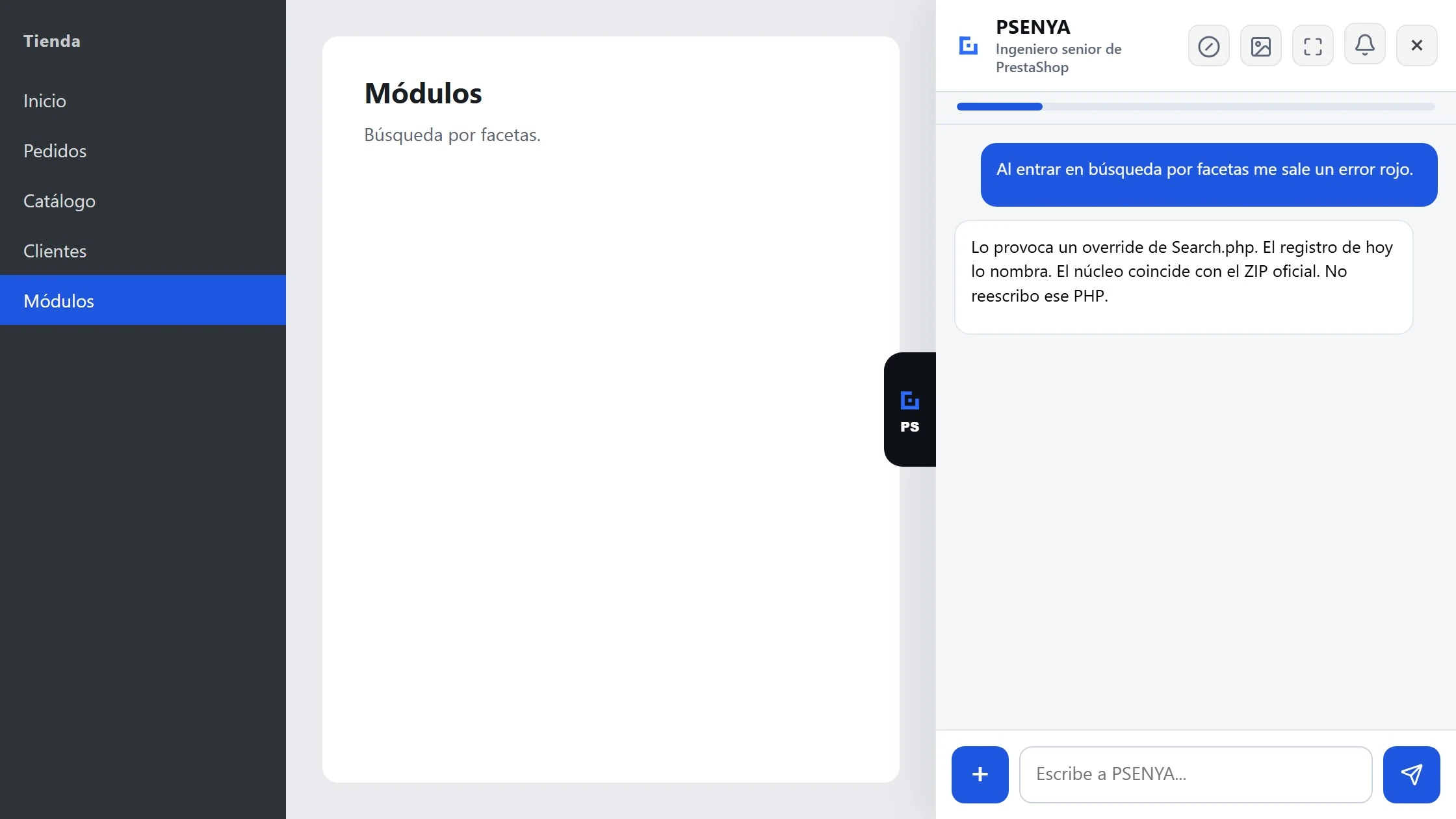
A day when the shop cannot take payment, and nobody notices, can cost more than a month of PSENYA. The first check runs on its own, when you open the chat. Repeating it every day needs your host's scheduled tasks, which is normal on hosting set up for PrestaShop.
Where does it save time?
PSENYA saves time in the work that repeats every week: finding why an order is stuck, checking why an email did not leave, preparing product changes in bulk, translating or writing records, and reading the shop before a developer spends billable time on it.
Before you pay another hour.
Let PSENYA read the shop and tell you what is happening.
Before your agency goes in blind.
The order, module, setting or log is already read.
Before a small task eats the afternoon.
Batch changes, translations and checks stay under confirmation.
Who is PSENYA for?
PSENYA is for people who run a PrestaShop shop and for people who make a living running other people's shops. The owner, whoever runs the back office, small teams, and the engineer who does support or maintenance. It does not replace a developer when the job is to build something new.
-
The owner.
You know the business. You should not need to learn the database to understand why Tuesday went wrong.
-
Whoever runs the back office.
Catalog, orders, settings, the things that pile up and nobody has time to check.
-
Small teams.
When there is no senior developer, and the agency answers in two days.
-
The engineer.
You do support or maintenance on other people's shops. PSENYA opens the client's shop, looks at the order, the setting or the module, and leaves the diagnosis and the change ready to confirm. It does not replace you: it saves you walking in blind. Serve more shops with the same team: remove the low-value diagnosis, not your service.
Does it speak my team's language?
Yes. English is the source language, and PSENYA also works in Spanish, French, German, Italian and Portuguese. Each employee sees it in their own back-office language, whatever language the shop itself is set to. This website is in English, Spanish and French.
- EN
- ES
- FR
- DE
- IT
- PT
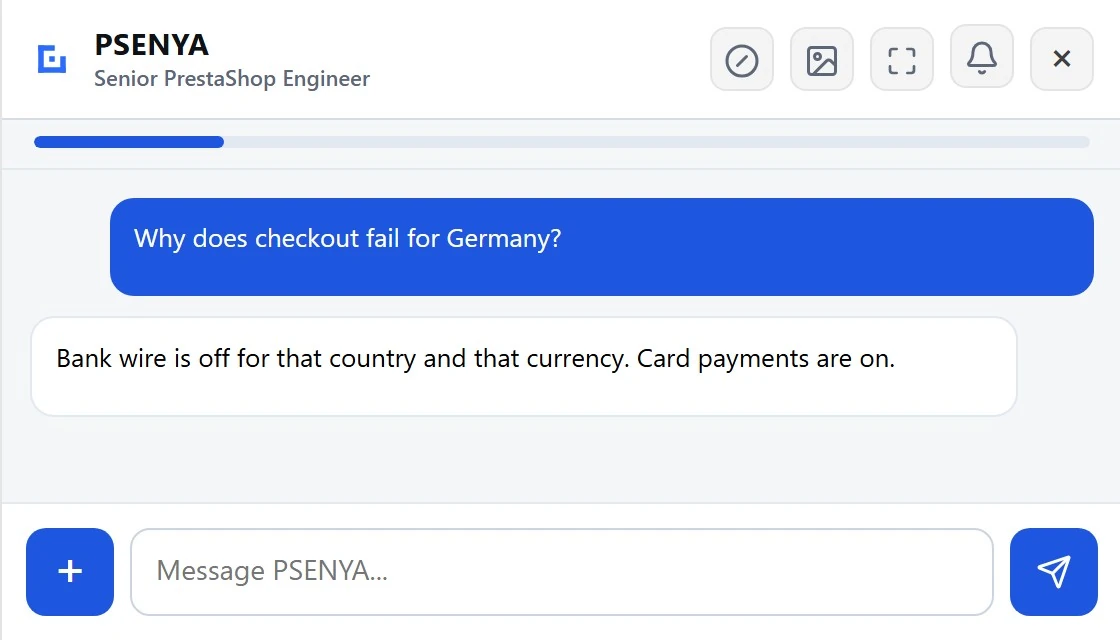
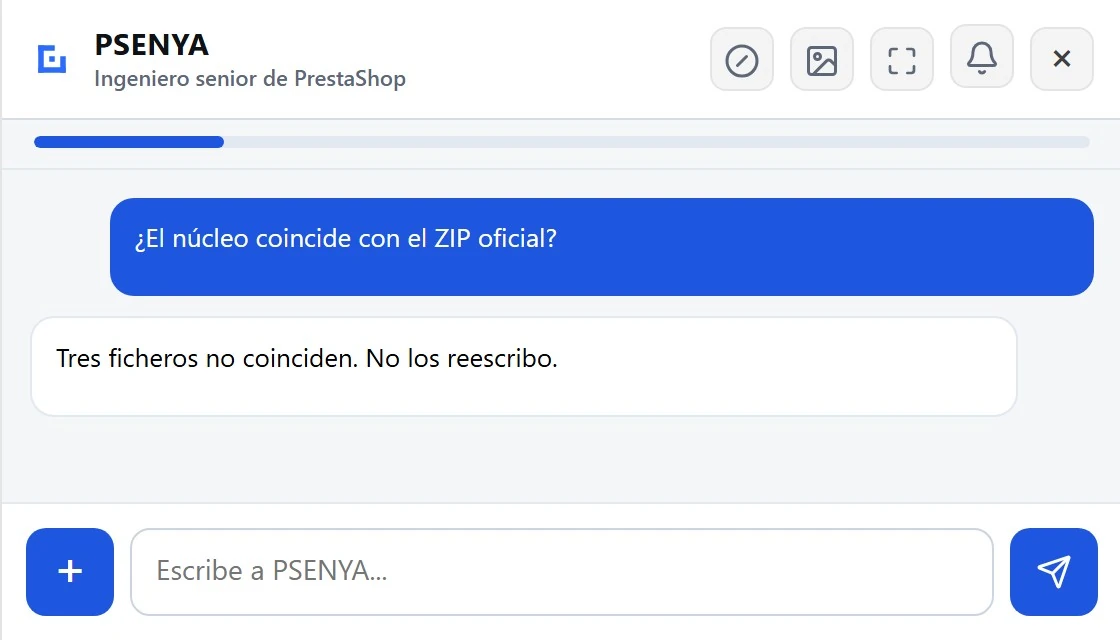
Put a senior engineer in your back office.
149 €/month, tax not included. One PrestaShop shop, unlimited employees. See it working on a real shop before you decide.
250 active licences, worldwide.
Agency or large shop? Start the trial on a client shop
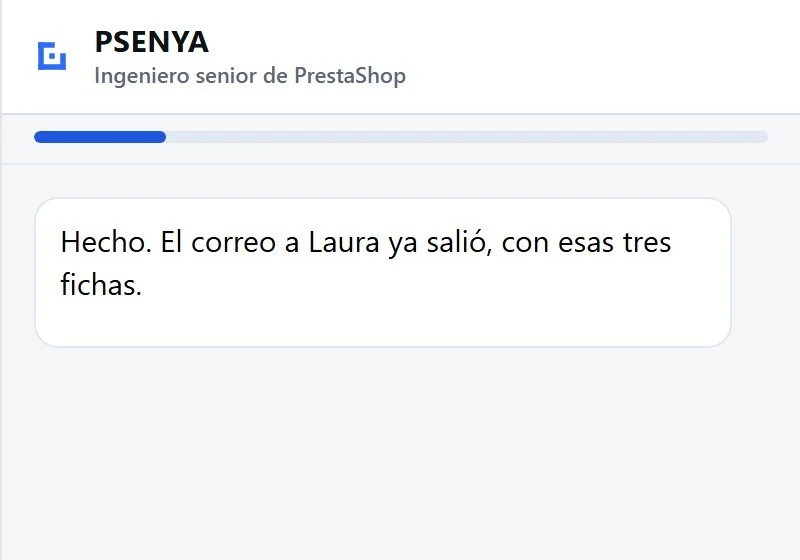
14-day trial on your shop
14 days or 2 million tokens, whichever comes first. No card. One trial per domain. You download the module and run it yourself.